FRESHLY CUT TO ORDER   ·   NATIONWIDE DELIVERY   ·   EXPERT ADVICE

Summer Lawn Care Guide

The sun has come out, but weather forecasters still don’t seem to be ready to say whether we’re likely to have a hot summer or not. It’s even harder to know whether there will be a drought. But follow our tips for summer lawn care, and your lawn should survive whatever the weather.

  1. Keep mowing
  2. Irrigate
  3. Feed

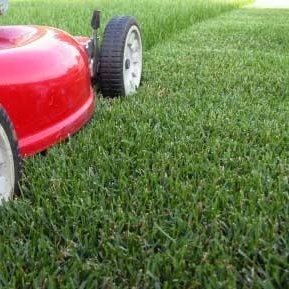
Even if the weather is dry, do keep mowing your lawn all summer. All kinds of garden turf need regular maintence to keep them looking healthy. If it rains fairly regularly, it may need doing twice a week, or even more often, so be guided by the state of the lawn. If it looks like it needs mowing, then mow it.

If it’s dry, then raise the blades of the mower a fraction. You can even leave the trimmings lying on the lawn to help retain moisture, although you’ll need to rake them up in the autumn. But whatever you do, don’t stop mowing. If you do, the coarser grasses in your turf grass will out-compete the less robust varieties, and you will end up with an unattractive lawn.
lawn-care-tips-summer

If there is a hosepipe ban, which seems fairly unlikely at this stage, there is no need to panic. Lawn turf is incredibly robust, and will probably recover fully and be absolutely fine once the rain starts again in the autumn. But if you are able to water, and you want to put a sprinkler on the lawn periodically, then go ahead.

The Royal Horticultural Society advises that it’s best to water about once every week or ten days, and for no more than about 10 minutes per area. This allows the water to get down to the roots, but means that the grass won’t become less drought-tolerant. If you want to completely revamp your garden, see our selection of turf for sale to give your garden a new lease of life if it looks tired.

Keep feeding your lawn turf throughout the summer, up until about late August or early September. Use a feed sold as a ‘spring/summer feed for lawns’, as this will have the right balance of nutrients to encourage both root and shoot growth. Come the autumn, you’ll need to stop feeding, to avoid encouraging soft growth that will be susceptible to frosts, but for now, keep feeding to keep the lawn growing well.

Mid-summer is not the time to try to repair any dead patches in your lawn turf, whether with seed or turf. Any drought will just kill off the repairs. It's best to wait intil the autumn, and the arrival of rain, to carry out repairs. At that stage, you will be able to see how much of your lawn needs patching or relaying and you can buy turf, preferably a good quality one, from turf suppliers and follow our guide to patching your lawn and how to lay turf.
Lawn Turf Problems - Couch Grass

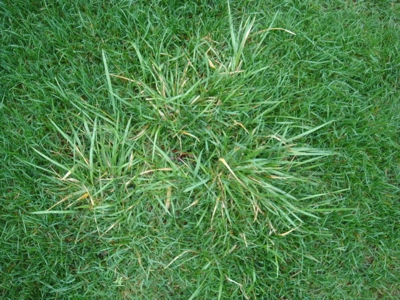
If you’ve done a fair bit of gardening, you probably already know about couch grass, Elymus repens, a perennial weed with spreading roots. It’s one of those that can regenerate from each little bit of root, so you really need to dig out every last bit of root, and not leave the ends behind in the turf. And the trouble with getting it into your lawn is that it can take a while to identify it as couch grass, and by then, it could have become well-established, and threaten to take over. And once it’s in the lawn, it rapidly spreads into your borders or vegetable garden, giving you a real headache.

It looks like any other tuft of garden turf from above, but grows fast. And underneath, when you pull up a clump, the roots are quite different from most grasses. Most grasses have a small clump of thin, hair-like roots. But the roots of couch grass are white, thick, brittle, and almost wiry in appearance, twining around the roots of other plants. So once you’ve dug up a clump of lawn turf, you can be pretty certain of what you’ve got.

couch grass

The best non-chemical control is to dig it out of the turf very carefully. And then dig it out again, to remove any new clumps that have come from small bits of root that were left behind. If you’ve really got it infesting your lawn, you may need to dig up the whole lawn and remove it. In which case, dig out all the infected area, and make sure you’ve got all the roots out, then treat fully with glyphosate to kill off all the couch. Wait a few weeks, and treat again with glyphosate if necessary. You want to be certain that you have removed every last bit before you start buying turf rolls to relay the lawn. It would be annoying, to say the least, to lay new lawn turf and then find it had been re-infested!

If you have to dig up your entire lawn, then you can order quality lawn turf from Turfgrowers to help get your garden back to normal. You can use our turf calculator to make sure that you have the right amount of turf for your garden. We can even advise you on how to lay turf if you want to have a go yourself, we have years of experience so can give you hints and tips on how to do it yourself.

The problem with glyphosate, and the reason that you can’t just launch straight in there with it, is that it is non-specific. Yes, it will kill couch grass very efficiently, but it will also kill your lawn turf and any other plants that get in the way. Before spraying, cover any plants that might be in the firing line with polythene, and don’t remove until you’re certain that it has dried. The best times to spray are early in the spring, when the couch grass growth is young, and in October to mid-November. Don’t spray during a drought, as it won’t be very effective. You may need to carry out more than one treatment, so wait a couple of weeks before replanting any area treated against couch grass.

Looking After Your Lawn in Winter

Winter Lawn Care Guide

During the winter, lawn turf can really suffer from the weather. It’s particularly bad if you can’t avoid walking on your lawn, for example, if you need to get to the shed, to fill up bird feeders, or to get to a compost heap. So what can you do to protect your lawn, and give it the best chance of surviving winter unscathed?

  1. Stay off it if possible
  1. Aerate if necessary
  1. Use moss killer and repair the damage
  1. As a last resort, replace your lawn
  1. Good care throughout the year

large winter lawn care guide

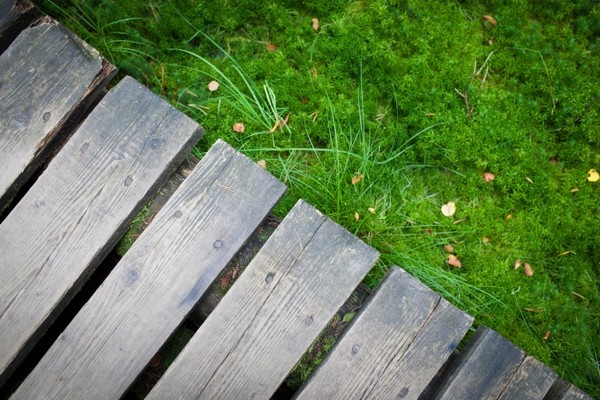
We know it’s not always easy, but if you can, avoid walking on a waterlogged or frozen lawn. If you can’t, then there are a few tricks. Don’t always walk across the same track, but take different routes across the lawn. If it’s really waterlogged, put down a plank temporarily to avoid compressing it more than absolutely necessary.

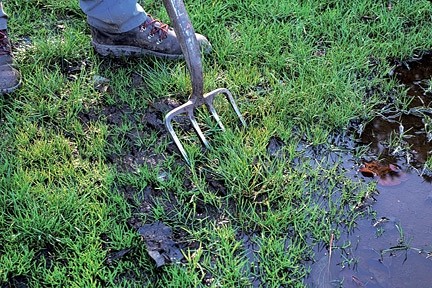
If you have a very waterlogged area of lawn, you can spike it using a fork or aerator. This probably works especially well if you have a clay soil, as it gives the water a chance to drain. For really waterlogged soil, put some sharp sand into the holes to improve drainage. But do put down a plank first, to avoid walking on the lawn and compressing it further while you’re working! It’s also best to sweep any standing water off the lawn, using a brush, before you spike. In future years, spike well in autumn to prepare your lawn for a wet winter.

large waterlogged lawn

Waterlogging is often caused by poor preparation of the ground before the lawn was laid. If you really can’t solve your waterlogging problems with spiking, then you will need to replace the lawn. Remove all the turf, and lay new high quality turf, having added a layer of sharp sand first to improve the drainage. You can usually buy turf from turf suppliers.

Keep an eye out for moss, which likes to grow in damp conditions. If necessary, use a proprietary moss killer, following the manufacturers’ instructions about how to apply. You may also want to get some lawn seed, to reseed once the weather warms up.

large moss in lawns

It’s probably not what you want to hear right now, as you look out at your poor, battered lawn, but the best way to look after a lawn in winter is to give it the proper care in spring, summer and autumn! Regular feeding with the recommended feed in spring and summer, and then autumn, will help your lawn grow a strong root system to withstand bad weather, no matter whether it’s drought in summer or waterlogging in winter.

Lawn Problems 11 - Ants in Your Lawn?

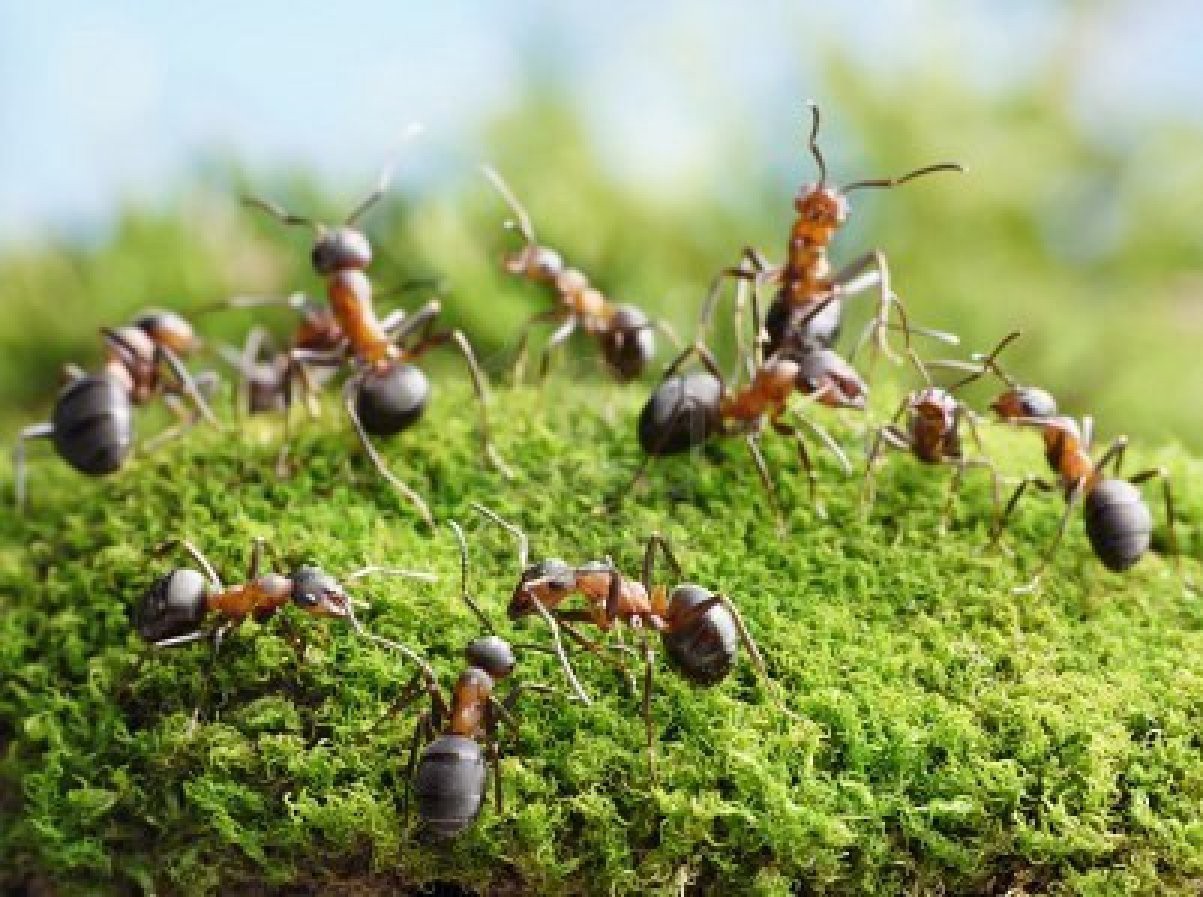
You may not exactly be worried about ants in your garden. After all, they are one of the most abundant insects on the planet, so you are almost certain to have some in your garden at some stage, and surely it’s best to live with them? They clear up crumbs and mess if you eat outdoors, and generally keep the garden tidy, so surely you can tolerate them? Well, yes, probably that’s true, but if they make nests in the lawn, then they will make a mess of it.

They disturb the soil around plant roots and deposit it on the surface, which can make a lawn look a bit untidy, and alter the levels. It generally doesn’t do the plants much harm, though, although it can be a nuisance. They can also be a nuisance with their aphid-farming activities: ants will protect aphids in order to feed on their honeydew, so you will end up with more damage to your plants.

large Moss Ants

Controlling ants

There are plenty of proprietary ant powders available, which will certainly kill ants, but may not destroy the nests, since these are more extensive than the surface activity suggests. They may also not be suitable for use around plants, so do check. You can also  get pathogenic nematodes, Steinernema feltiae,  to treat ant nests in lawns and flowerbeds. As with most nematodes, these need to be watered onto the soil around the ants’ excavations.

Dealing with ant activity

Don’t try to mow the piles of excavated soil! You will spread them all over the lawn. Instead, wait for a dry day, and brush the soil away, back onto the flowerbeds. If your lawn has suffered from ant activity for many years, it may well be uneven from all the excavating. In that case, you can patch and level. This is best done in winter when the ants are less active.

Using a sharp spade or edging tool, peel back the turf in the raised areas, and remove excess soil to re-level. You can then relay the lawn turf, carefully pressing down the edges, and watering to encourage re-rooting. If there are large dips in the lawn, you can do the same thing: peel back the turf, and add topsoil underneath, before relaying the turf carefully. Once relaid, try not to walk on it for at least a few days, to give it a chance to regrow.

Is it worthwhile?

The general consensus is that if you get rid of an ants’ nest, then more queen ants will probably come into the garden to establish new colonies to replace the one that was destroyed. It may therefore not be worthwhile trying to eradicate nests, unless they are in a particularly problematic place.

Lawn Problems 10 - Waterlogged Lawn

Waterlogging in lawns is a problem which tends to show up in wet winters more than any other time of year. It is when the lawn does not drain at all, and water lies on the surface of the lawn after rain. Now, having a few puddles may not seem like too much of a problem in itself, but it does lead to other problems, such as compaction of soil. And if the water lies around for a long time, the grass can actually drown because the water prevents air getting to the roots, and then moss will take over, because it really likes damp conditions. A wet lawn also provides perfect growing conditions for algae and lichen. So, all round, it’s best to deal with waterlogging quickly and efficiently.

Waterlogging often happens on clay soils, because the soil gets very compacted very easily, especially if it’s wet. It can also happen if the soil was not properly prepared before the lawn was laid or seeded. If it’s in patches, it may be caused by a fungal disease, dry patch.

large waterlogged lawn

How to Fix Watter Logging in a Lawn

If your lawn suffers from waterlogging, then spiking, pricking and slitting the lawn can help.

  • Pricking or slitting consists of making narrow, shallow holes to help the water drain away. It’s best to wait until the water has drained away, or brush it off onto the flower beds before doing this, as otherwise the holes you create will just fill straight up with water.
  • Spiking deep holes is better, as the water drains away beyond the roots of the grass, and doesn’t risk drowning the lawn turf. You can either use a garden fork or a hollow tine aerator, which removes the soil from the holes. Fill the holes with a free-draining top dressing, such as sharp sand, or a proprietary lawn dressing. It’s best to spike every autumn, or at least every few years, to save having to do this as an emergency measure when your lawn is already waterlogged.

Overall, the best thing you can do is keep your lawn healthy and growing, and particularly encourage good strong root systems as this will make the lawn more resistant to both drought and flooding. Feed it regularly in spring and autumn with the correct fertiliser mixes for the season. Apply moss killer regularly to discourage moss from growing, especially in winter when the grass is less active.

As a last resort, as usual, the best thing to do is abandon your waterlogged lawn, dig it up and start again. Put down a 5cm deep bed of sharp sand, topped with a layer of topsoil mixed with manure or other organic matter, and then lay good quality turf on top.

Lawn problems (9) - Soleirolia Soleirolii

Mind Your Own Business or Soleirolia Soleirolii

Soleirolia Soleirolii

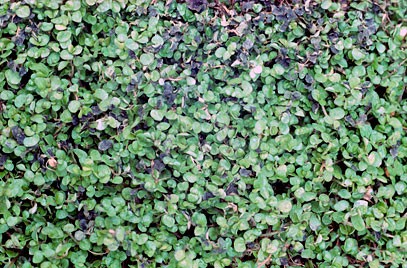
No, not a problem with nosy neighbours, but a creeping perennial, Soleirolia soleirolii (syn. Helxine soleirolii). It looks lovely in wall and patio crevices, spreading quickly to fill gaps, but regrows from the smallest sections of stem, and can be a nightmare to control once it gets into a lawn or borders. It forms dense bright green mats of foliage, and also has a golden form, with pretty white flowers in spring. So yes, it’s attractive, but don’t be fooled, its spread is described as ‘indefinite’ and you really, really don’t want it in your lawn!

If you have it in a border:

  • Try to remove it. Hoe it repeatedly in warm weather, or bury it under a thick layer of mulch as often as necessary.If you have it in the lawn,
  • Don’t compost your grass clippings, as mind-your-own-business stems can survive domestic composting process, and spread still further.
  • Patches in the lawn should be dug out carefully by hand, using a hand fork, in April or September. Try to make sure that you get every last bit out.
  • Once removed, add topsoil to re-level the lawn, and then re-seed the patch, or even buy turf to patch it, (read more about re-seeding / patching here).

If mind-your-own-business is widespread in your lawn, try feeding the lawn regularly to encourage strong lawn turf growth, to outcompete the weed. You can also lightly scarify the lawn several times  in March and April, and again in September, as this will weaken the mind-your-own-business, and give the grass a chance to grow into the space.

Unfortunately, mind-your-own-business is resistant to all lawn weedkillers that are approved for garden use, so you can’t use a general weedkiller on it. You can use glyphosate with some success, particularly as a spot treatment, but you will need to be extremely careful  as it will also kill your grass, and any surrounding plants too if it gets onto them. Glyphosate is sold as Scotts Roundup, Scotts Tumbleweed, Bayer Glyphosate Kills Weeds & Roots and Doff Knockdown Weedkiller, as well as a number of other brand names.

For best results, bruise the mind-your-own-business foliage lightly by walking on it before applying glyphosate, as this makes it more effective. Use a ready-to-use spray or gel for spot treatment (such as Roundup Gel), as this will be easier to target. If the weed is near shrubs and perennials, then shield them from the spray if possible.

As a last resort, if mind-your-own-business has really taken over your lawn, then treat it all over with glyphosate to make sure you kill all the weed, wait a few weeks and retreat if necessary, then buy turf and returf the whole lawn. Good quality turf from turf suppliers should not contain any weeds, so you should be safe from reinfection after that.

Lawn Problems (8) Animals

Animals in your garden can be a real nuisance. Rabbits and moles in particular can make a spectacular mess of a beautiful stretch of lawn turf, but what can you do about it?

Moles

Usually the first sign of mole activity is molehills in your lovely lawn, and it’s most likely to happen in late winter or early spring. But a molehill is not just a pile of soil, because it is also the visible sign of a network of tunnels. You’ll need to remove the soil before mowing, and also backfill surface tunnels to prevent them from collapsing.

mole

There are several ways that you can remove or deter moles. Electronic buzzers are available, which are supposed to deter moles, but nobody seems to be sure just how far away they will go.

Humane traps are also available. They need to be carefully placed in a tunnel  about 10-20cm deep, and not directly below the molehill. You can find one by clearing away a molehill and checking the direction of the tunnel with a pliable stick. Dig down to the tunnel with the minimum of disturbance, and make sure that you rub your hands and the trap with soil to disguise your scent. Align the jaws of the trap with the direction and depth of the tunnel, and cover the hole with a bucket to shut out light. Check the trap daily, as sometimes the mole pushes soil into it and it will then need re-setting.

You can also buy live-capture traps if you don’t like the idea of killing a mole, but you’ll need to check them more often, as the mole may die of stress or starvation if left more than about half a day.

You should also be aware that vacant tunnels may simply be colonised by another mole, so you may need to keep trapping and removing moles.  Alternatively call a mole catcher.

Rabbits

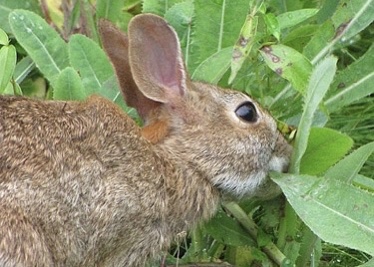
Rabbits do a lot of damage to plants, so their depredations on your lawn may be the least of your worries. But they can dig and scrape in lawns, and make a horrible mess.

rabbit

If you live in an area where rabbits are rife, it’s hard to keep them out. But a wire mesh fence with the bottom 30cm bent outwards at right angles and laid flat on the ground will deter burrowing underneath, and hopefully keep them off flower beds or out of the garden altogether. A mesh size of 2.5cm or less will be too small for even young rabbits to squeeze through.

The best way to avoid rabbit damage is to grow plants that are less attractive to rabbits. They’ll be less likely to come into your garden, so less likely to dig up your lawn.

If you have a rabbit problem in your garden find a man with a ferret!

Snow Mould and Take-all Patch - Lawn Problems 7

Snow mould and take-all patch are both caused by fungi, but since they’re both quite damaging to lawns, we thought it would be helpful to provide more information than was possible within the scope of the Fungi article.

Snow Mould

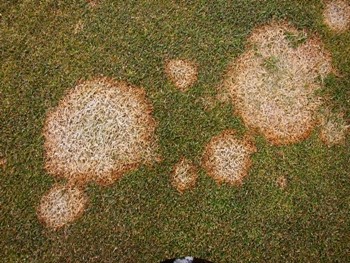
Snow mould, or fusarium patch, is a common cause of brown patches in lawns, and is caused by a fungus, Monographella nivalis. It is a very damaging disease of turf grasses, and is very hard to control. It is most commonly found in autumn and during spells of mild weather in winter, and appears as yellowish patches of grass, which turn brown, increasing in size to 30cm or more. During wet conditions, you may notice a pinkish or white cottony growth, especially at the edges of the patch. It is particularly troublesome with annual meadow grass (Poa annua) but may also affect bents (Agrostis species), fescues (Festuca species) and perennial rye-grass (Lolium perenne).

large snow mould in lawn

It’s very difficult to treat snow mould, but you can try to keep the lawn drier, by spiking it and removing dew in the mornings. It also helps to improve the air flow over the lawn by cutting back any low-hanging shrubs. You can also try using a fungicide. As with red thread, the only fungicide available for domestic use is trifloxystrobin (Bayer Garden Lawn Disease Control). You can use it anytime, unless it is very dry or the ground is frozen, but not more than twice a year. Adding iron sulphate is also recommended, to toughen the grass and acidify the soil, discouraging the fungus.

Take-all Patch

Take-all patch also causes brown patches in lawns, especially in lawns that have a high proportion of bents (Agrostis species). Most lawn turf, at least the turf that you buy from turf suppliers, contains a low proportion of bents, but this can change over time in mature lawns.

Infection is most likely to happen in periods of drought, when the lawn is under stress. You will know that you have a problem with take-all patch if you see patches of grass that have reddish leaves turning to brown as the grass dies. The patches can vary in size from 1-2cm up to 1m or even more in diameter. The centre of the patch often looks quite different, as it can become colonised by resistant grasses such as annual meadow grass (Poa annua) or broadleaved weeds taking advantage of the space. The roots blacken and decay, and you can usually peel back the affected turf, as it has no roots. 

There is no chemical control, and the best thing to do is to overseed quickly with grass that is resistant to take-all patch, such as rye grasses or fescues, or patch with turf containing resistant species

Lawn Problems (part 6) Fungi and Moulds

Fungi can appear in lawns for a variety of reasons, and not all are a problem, although they can look unsightly. This article gives you a bit more information about the most common fungi to appear in lawns.

Fairy rings

These fungi are often seen in lawns, and cause circular rings of dead grass or small brown toadstools. The most damaging of the fairy ring fungi is Marasmius oreades, which lives in the roots of the grass, and alters its appearance. Unfortunately, there are no chemical controls, and it’s not really worth sweeping up fairy rings, because they produce so many spores. 

large fungi in lawn turf

You can treat the dead patches by spiking and watering, as this helps to reduce the water-repellent effect of the fungi. Feeding the lawn will also help the grass to grow again into the dead patches.

Mycorrhizal fungi

These are fungi living around the roots of trees. They generally don’t cause a problem, but can suddenly appear around the base of a tree, and if that tree is in the middle of a lawn, this can be a source of irritation to the gardener! However, since they are generally beneficial to the tree, they are best left alone.

Saprophytic fungi

These are fungi that feed on dead or decaying plant or animal remains. They sometimes produce large numbers of fruiting bodies, that appear as mushrooms or toadstools. If that happens in a lawn, they do look a mess, although they don’t do any harm to the lawn. Unless you’re certain they’re not poisonous, try to keep children and animals away from them. And if you don’t want them there, simply sweep up the fruiting bodies and dispose of them, preferably before they open and spread their spores!

Slime moulds

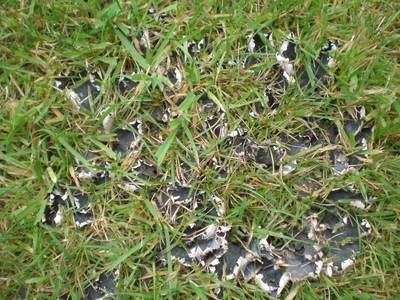
There are a wide variety of slime moulds that appear on lawns, but most of them do not attack or kills the grass, only look very strange and unsightly. A slime mould is a very primitive organism, simpler even than a fungus, and the different sorts of slime mould vary greatly in appearance and structure. They are most common in late summer and autumn, although they can appear at any time. The structures appear suddenly, but are likely to disappear nearly as suddenly, and no control is necessary. If you find them particularly unsightly, you can spray them with a jet of water to disperse the fruiting structure.

Snow mould and take-all patch are also caused by fungi. Both these two lawn conditions are very damaging to lawn turf, and much more difficult to control than the other fungi in this article, so we have provided a separate article on these two, with a bit more detail about how to control and eradicate them. 

Naturalising bulbs in lawns

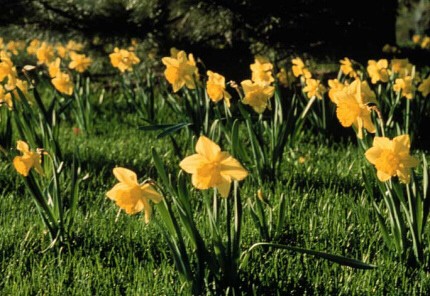
From early September until the end of October or early November is the best time to plant spring bulbs. So how about planting some in your lawn? They will naturalise over time, and become a key part of your spring garden, brightening the place up with their cheerful colour. Adding bulbs to the lawn is a very good way to get additional spring colour into a garden where there isn’t much space for bulbs in the garden beds, or just to add an accent of colour in the middle of all that green.

large naturalizeddaffs

So what sort of bulbs are suitable, and what do you need to do to plant them?

Almost any sort of bulbs are suitable. Early bulbs like snowdrops, crocus and dwarf iris will have finished flowering and the leaves died back by the time you want to start mowing your lawn in late spring. However, the leaves of daffodils and tulips will not yet have died down by the first mowing, so you will need to leave the bulb patch unmown for a while. This may or may not suit you, which could dictate your choice of bulbs!

A suitable place is often where the lawn turf is a bit sparser, perhaps under a tree. Since deciduous trees won’t be in leaf when spring bulbs are flowering, they won’t be affected by the shade. But almost anywhere is suitable, and if you really want, you could fill the whole lawn with spring bulbs.

For a natural look, it’s generally recommended that you scatter the bulbs around on the turf, and just plant them where they land. You can buy bulb planters, but I’ve never found them much good, as they’re not really sharp enough. Instead, I find a good trowel is better, and a long thin one better still. If you’re planting in the middle of your beautiful lawn, cut the turf in an H shape with a garden spade, and lift it back. Dig a hole about 2 ½ times deeper than the bulb and drop the bulb in with the roots downwards. You can probably plant four or five bulbs into each H. It can be helpful to drop in a little compost into each hole as well, just to give the bulbs a bit of additional ‘oomph’.

Carefully replace the turf, pressing down the edges, and water. Where there isn’t much grass, such as under a tree, you can just dig holes, but your turf may look a bit battered by the end.

And finally, in spring, don’t forget to let the bulb leaves to die back naturally before you mow them, as otherwise the bulbs will not be able to flower again next year.