FRESHLY CUT TO ORDER   ·   NATIONWIDE DELIVERY   ·   EXPERT ADVICE

Mowing your Lawn and Lawn Heights

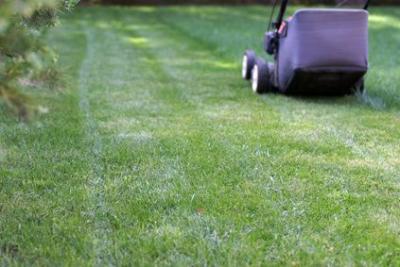
The secret to a lush, green, healthy lawn is of course to apply regular water, feed or fertiliser, sun and regular mowing.  Mowing should be done at the right time, in the correct way to achieve the best results.

Grass is a living plant and like other plants, cutting off the growing points encourages growth from the base of the plant resulting in a more tightly woven, thicker and stronger foliage.

Cutting grass regularly multiplies the existing grass plants.  If you didn't mow your lawn at all it would be sparse and quite frankly ugly.

The keys fact's you need to consider when caring for your lawn is the frequency of which you mow and the height to which you mow it.  Whilst mowing is important and encourages the plant to thicken, we must remember that the leaf is the engine room for the plant and reducing the size of the leaf also reduces the plants strength and growth capacity. Therefore a good looking lawn is achieved by light mowing on a regular basis. Grass
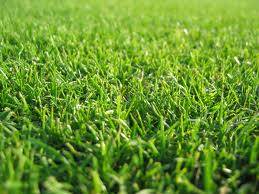
Follow these simply pointer's to help you get started

  • Raise the height of the blade in Spring, the first few cuts should be light taking around 1/4 of the blade off.
  • In the dryer Summer months the grass starts to slow down it's growth, make sure you do not take off more than 1/3 of the blade's height.  In the height of Summer you should be mowing to a level of 3/4 of an inch to 1 inch.  This is based on domestic lawns, for professional lawns such as golf courses this may be different.
  • In Autumn the speed in which the grass grow's will slow down some more as daylight length reduces, make sure you do not take as much off.  You should raise the blade on your lawn mower so it cuts the grass to around 1-1 1/2 inches heigh.  Gradually reduce the amount of cuts you make from this point onawards, aiming for your last cut in late September, early October.  For help on feeding your lawn see our Lawn Care Calendar.
  • Make sure lawn mower blades are sharp.  Blunt blades will tare and damage the grass, making it harder for the grass to recover.

Points to Remember When Mowing Wet Grass

  1. Raise the height of your lawn mower's blades.
  1. Slow down!
  1. Be careful if the mower does clog up with wet grass; do not put your hand or fingers in the way of blades!
  1. Hose the mower after to flush away clogged grass.
Lawn Care Calendar

January to March

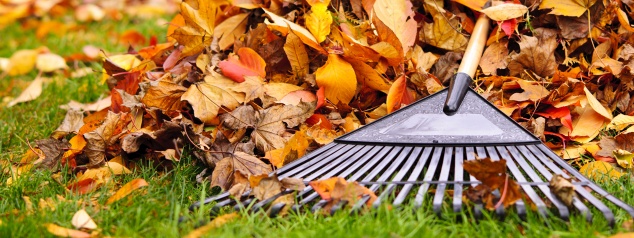
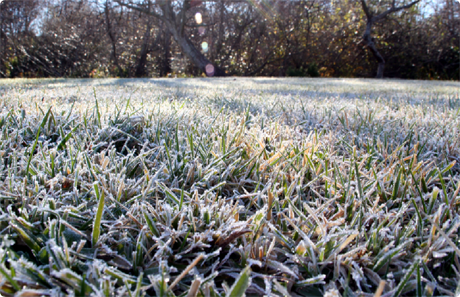
These three months are quiet times in the gardening calender and indeed when it comes to caring for your lawn. The thing you can be doing is clearing your lawn of leaves.  A thick layer of rotting, damp leaves can potentially discolour and repress grass.  If the lawn becomes frozen or waterlogged try and avoid walking over it.  It is also a good time to check your lawn mower and maybe think about popping it in for a service.

Frozen-Lawn

March

If the weather permits you can make your first cut.  Remember to set your mower blades high, cutting too short may damage the grass.

Lawn

Spring

With the arrival of Spring comes along the start the lawn care season. Feed the lawn mid spring with an application of Spring lawn feed. If you have a moss problem, now is a great time to try and irradiate it. See our "How to Treat Moss" page.   Regular, gentle cuts will encourage the lusciousness of the grass and help prevent weeds.  Trim the edges of of paths and borders to keep your lawn smart looking.

Spring-Lawn

Summer

The warmer day's are here so the lawn care is upped slightly.  Mowing should be at regular cutting height now once or even twice a week as grass grows at it's fastest rate now.  Click here for more information on "Grass Cutting Heights".  Trim lawn edges to keep them looking neat.  Remove all grass clippings from the lawn or this will discolour and sometimes even kill off the grass that lies beneath.

In terms of watering, a good soaking a few times if better than lots of smaller, lighter watering's.  

If you still have some persistent weeds you can now use a 'spot' treatment or pull out the touch little things with a hand held weeder.  We like this Wilkinson version.

Summer-Lawn-

Autumn

Now is the time to run repairs on your garden so if you have any holes or bald patches you can be filling these with topsoil, raking over bald areas and either re-turfing or re-seeding.  The weather normally in Autumn is warm and fairly moist which is great for growing and grass seed germination. 

Autumn is a great time to prepare any new lawn area, again the weather conditions this time of year should be perfect for the job. 

Autumn-Leaves

After September

You should be thinking of mowing your grass for the last time now, make sure your last cut is a light mow, taking of the tops of the blades.  You can purchase Autumn lawn feeds if you wish to give your lawn an extra treat.

Brush up Autumn leaves.

Winter

Rake out thatch from turf and continue to rake up leaves.  Spike the lawn to assist with drainage. Brush in peat and sharp sand.  Other than those few things; Winter is an easy time on the lawn front, so take it easy, enjoy the festive season and remember to keep off grass if damp and frozen.

Fairy Rings in Your Lawn

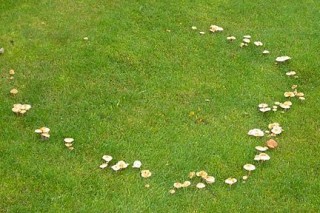
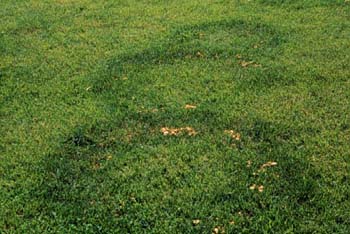
small fairy ring

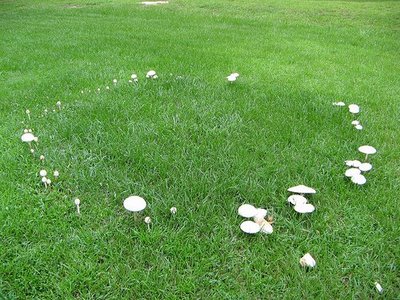
Ever wondered about those small circles of mushrooms or dark circles on your lawn? Wonder no more; all is explained in my blog about this mysterious fungi.

Mainly found in established lawns the Fairy Rings are caused by solid borne fungi that naturally occur in the soil underneath a lawns suffice. There are 3 common types in the UK.

Where has it come from?

Over 60 species of Fungi have been know to be the culprits of creating these curious yet magical circles. The old wives tale of trying to dig the ring out just would not work as it is so easy to leave tiny particles of fungal mycelium that will just grow another ring.  They can be found on all types of soil.

They will appear on the surface of the lawn in various shapes and can spread year upon year.  Sometimes the little sneaky fruiting bodies or toadstool can be viewed when the weather is suitable for the development of them.

The Disease Triangle

Any lawn disease needs to follow the principle of the Disease Triangle where there is a Host (Grass), a Pathogen (Disease, in this case our Fair Rings Fungi!) and an ideal Environment (Temperature and Moisture). When lawn owners enquire as to why they have toadstools on their lawn, it is mostly because they have always had the spores in the soil, just that the environments for the spores to germinate and develop and thus produce a fruiting body are ideal for that time of year.

Types of Fairy Rings

Type 1

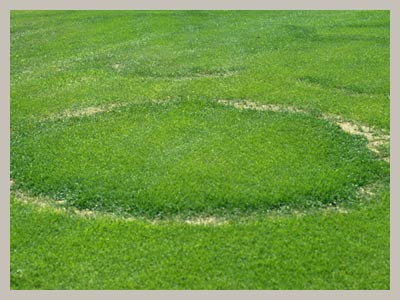
Rings appear as circles of dead or stressed turf bordered on both sides by lush green stimulated grass growth. You may see mushrooms or toadstools in the ring. The reason for the lush green growth on the outer circumference of the ring is the soil bacteria in the ring eating the thatch and fibre exuding Nitrogen, which in turn is a food source for grass. The reason for the dead grass within is a secondary by product from the bacteria and fungi namely a waxy substance that literally coats the surface of the soil particles meaning that they are unable to attract and hold onto available soil water, and the soil becomes hydrophobic within the circle and watering with normal water will not resolve the issue

fairy-ring-type-a

Type 2

Fairy rings appear as darker rings of faster growing grass. Mushrooms or toadstools may be present in the rings. They are not usually as damaging as Type 1 rings. Applying fertiliser to the complete lawn, trying to miss applying fertiliser to the stimulated grass to deepen the colour and increase the growth can often mask them. Type Two rings to not damage the turf and the problem is more visually unsettling to the viewer.

fairy-ring-type-2

Type 3

Rings have no detrimental effect on the quality of the turf. They consist only of mushrooms or toadstools. These mushrooms or toadstools may be in rings, arcs, lines, patches or solitary. They can be removed by brushing or mowing, which will also help to prevent the spores being spread.

fairy-ring-type-3

Can you eradicate a Fair Ring?

To try to eliminate the ring you would need to try to eliminate part of the equation of the Disease Ring; i.e. the conditions. This potentially could be really tricky or quote hard work at least!

If the surface that the rings are growing on is a dry one, wetting this area will assist in the prevention but trying to water the area with tap water may be problematic as the water will run off. A wetting agent will make it wetter and allow it to penetrate a really dry area.  Spiking the grass will help to get moisture to the grass, roots and soil.  When the soil becomes wet again the area can be grass seeded especially within a Type One Ring. There are no control products available to the every day gardener and even Green Keepers and Groundsman have a few available.

Digging out the infected area, removing and replacing the turf and soil may help also.

Fair Rings are naturally water repellent.  Preventing them is better than a cure! Buying a specialist Wetting Agent is good advice and following the instructions that come with it is the best course of action. Applying this agent requires continued commitment however.

Summer Lawn Care

Although summer is our favourite time of year in the garden, it can be the toughest time for your beloved lawn. Hot dry weather will stress grass, especially mowed lawn grass and the increased use of the garden will cause even more wear and tear.

So what should you do to help maintain and improve your lawn through this the busiest time in the garden?

large summer lawn care

Give your lawn a drink

Water during the cooler times of day (i.e early morning or eveneings) when the water is more likely to soak into the soil rather than evaporating in the heat of the day.  It is better to give your lawn a good soaking a couple of times a week than a light sprinkling daily.  Light, regular watering will not encourage roots to grow down into the moist soil.

A healthy, well fed lawn will have a deep and strong root system which will enable the grass to reach moisture from deeper down in the soil and withstand drought better.

Feed your Lawn... its hungry!

Feed your lawn with liquid lawn feed whilst watering or pelleted fertilsers before watering, this will ensure the fertiliser is washed into the roots where it is required.  The warmer the weather the faster your grass will grow and the more nutrients it will take from the soil so the more you will have to replace... rember a growing well fed lawn is a healthy lawn and heathly lawns look better!

Give it a light trim

Try to mow your lawn regularly, light regular mowing is far better for your lawn than cutting grass very short every other week.  Short croping will slow grass growth, weaken the grass and encourage moss and weeds to take hold leading to a patchy lawn.  Try to cut your lawn weekly to about 1 to 1.5 inches.

Repairing Patches

Hot dry weather is not the best time to repair with seed as the grass seed will simply dry out and blow away.  Spring and Aughtumn is a better time for seeding repairs.  A faster and more successfull result will be achived by patching with turf at this time of year.

Looking after Your Lawn in a Drought

A Guide to Looking After Your Established Lawn

Remember existing lawns do not need to be watered (unlike newly laid turf), even if the grass goes brown it will come grow back and go back to being green and lush.  Grass is extremely resilient and will recover when the rain eventually falls.

  1. Increase your mowing height to 35-40mm which creates deeper roots which are able to reach deeper moisture and also will create shade from higher temperatures. 
  1. Keep mower blades sharpened so as not to bruise grass.
  1. Use a watering can to water your lawn.
  1. Capture water from roofs and gutters in water butts.
  1. You do not need to feed grass in the summer months, grass does not grow in hot, dry weather.
  1. Avoid using a blanket weed killer which may damage grass, instead use a spot weed killer.
  1. Apply a light layer of compost on grass to help keep the moisture in.
  1. Scarifying your lawn once a year to remove all moss, matted and dead grass is advised, if this is left to build up it will create a barrier from rainfall.  You can also spike your lawn creating small holes will help water get through to the grass roots. 
  1. If you are allowed to use a hose pipe and wash you car at home, park it on the lawn so the lawn will get the excess water!